Direct answer
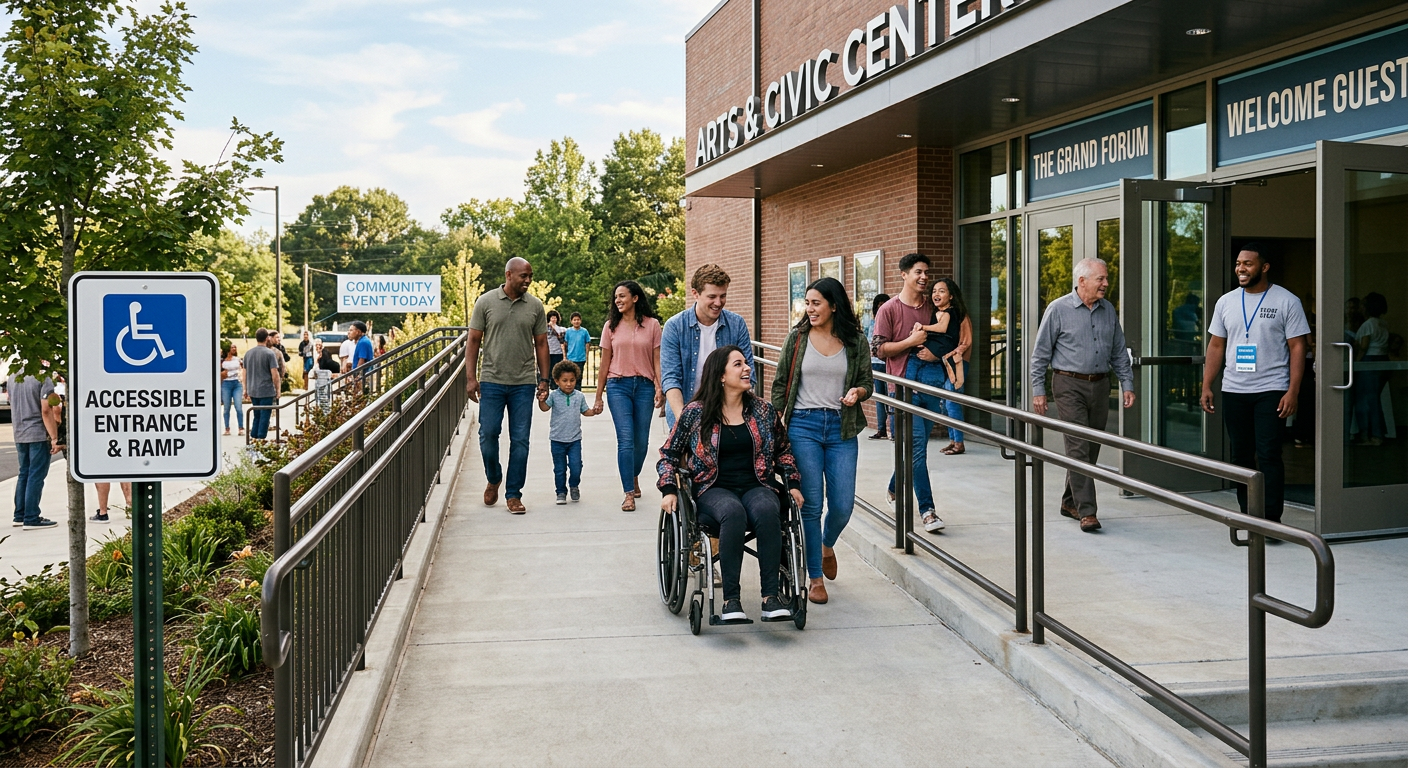
Title III of the Americans with Disabilities Act (ADA) applies to businesses and nonprofits that serve the public, requiring equal access to the goods and services they offer. For event hosts, this means verifying an accessible, stair-free route connecting parking or drop-off to the event space, accessible restrooms, and a way for guests to request accommodations in advance—whether the venue is a permanent facility or a temporary outdoor setup.
Why this applies beyond permanent venues
According to ADA.gov, Title III of the ADA applies to businesses and nonprofits serving the public—a category that includes most commercial event venues, hotels, and many rented spaces. The general requirement is that these businesses must provide people with disabilities an equal opportunity to access the goods or services they offer. For a one-time or outdoor event in a temporary setup, apply the same thinking: can a guest using a wheelchair, walker, or cane actually reach and use every area of your event without assistance?
Core items to verify with your venue
Walk through (or ask your venue to confirm) a continuous path from parking or drop-off to the event space, entrance, restrooms, and any stage or speaking area, without relying on stairs as the only option.
- Is there a stair-free, continuous route from parking/drop-off to every area guests will use?
- Are accessible parking spaces available and reasonably close to the entrance?
- Are accessible restrooms available and clearly marked?
- If there is a stage, head table, or speaking area, is there a ramp or step-free path to it?
Communication and advance requests
Include a simple way for guests to request accommodations when they RSVP—a contact email or phone number is often enough. This lets you address specific needs (a reserved accessible seat, an ASL interpreter, a dietary accommodation) before the event rather than improvising on the day.
For outdoor and temporary events
Outdoor events on grass or uneven terrain present specific challenges: wheels can sink into soft ground, and gravel paths can be difficult for mobility devices. Ask your rental company about portable flooring or matting for high-traffic paths, and confirm that any temporary structures (tents, portable restrooms) are placed along an accessible route rather than isolated from it. Picnyk can help you discover venues and rental vendors; verifying accessibility for your specific event and guest list remains the host’s responsibility.
Frequently asked questions
Does the ADA apply to a private event at a rented venue?
Title III of the ADA applies to the businesses and nonprofits that operate the venue itself (most commercial event spaces, hotels, and rented facilities), requiring them to provide equal access to their goods and services. As the host, it is good practice to confirm accessibility with your venue regardless, since it affects your guests directly.
What is the most important accessibility feature to verify first?
A continuous, stair-free route connecting parking or drop-off to the event space, entrance, restrooms, and any stage or speaking area. Without this, other accommodations matter less.
How should I collect accessibility requests from guests?
Include a simple contact method (email or phone) on your invitation or RSVP so guests can share specific needs in advance, giving you time to address them before the event.