Direct answer
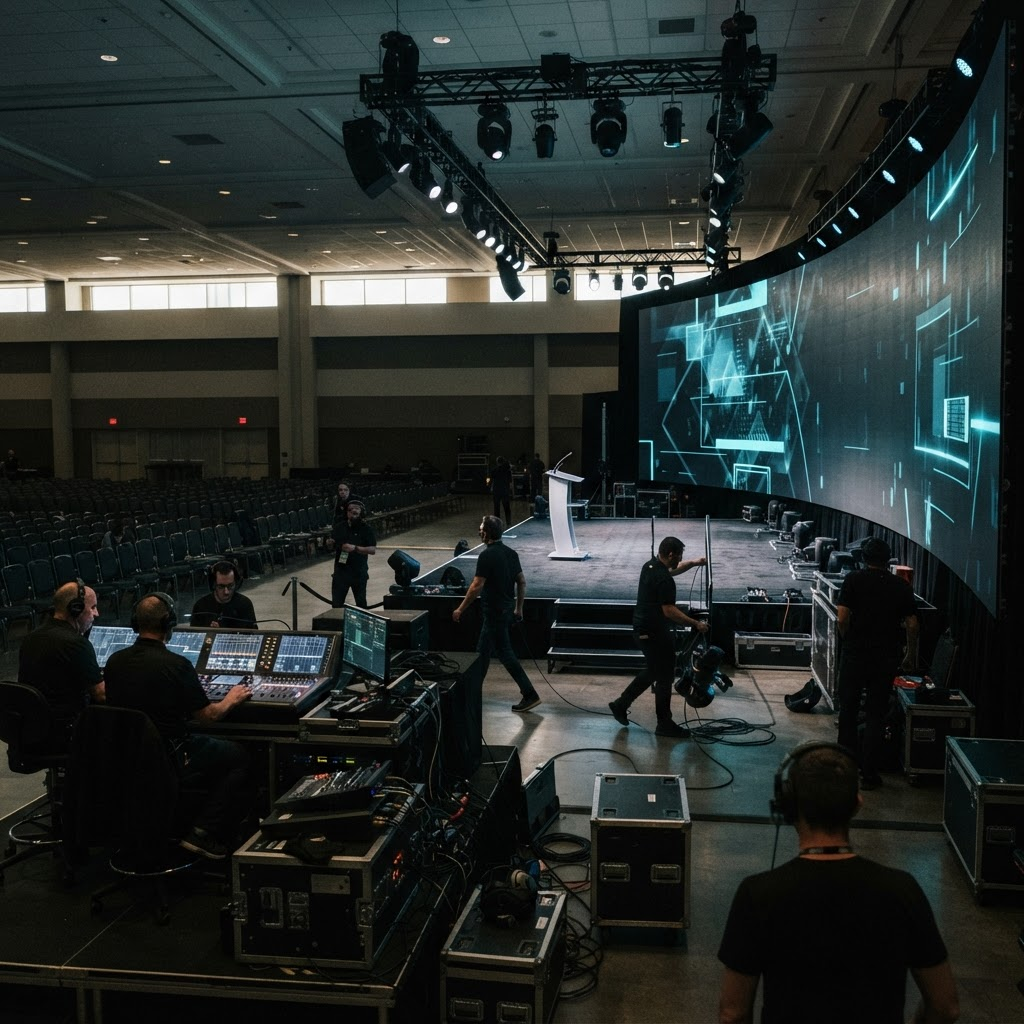
Bay Area corporate AV cannot be reduced to one reliable per-person average. Price the program, rooms, operating hours, system design, crew, rehearsal, freight, power, internet, venue services, contingency, taxes, and exclusions. A selected-service calculator result is not a complete production quote.
Confirmed
- Room count and operating hours change labor and equipment scope.
- Venue-direct services may not appear in an outside production proposal.
- Picnyk cost pages label modeled selected-service assumptions and exclusions.
Quote-dependent
- Equipment design and availability
- Crew positions, minimums, overtime, travel, and meals
- Venue internet, power, rigging, freight, security, taxes, and fees
Why does AV cost vary so widely?
A four-hour program can require days of design, prep, load-in, rehearsal, operation, and strike. Multi-room concurrency and reliability standards also multiply systems and staff.
What is selected-service versus full-scope?
Selected-service estimates cover named categories only. Full production includes every technical system, labor period, venue interface, commercial charge, and unresolved allowance.
How should companies control the budget?
Set the program priorities, normalize proposals, expose venue-direct costs, approve substitutions, and track scope changes against one baseline.
Recommended production timeline
These are Picnyk planning recommendations, not organizer deadlines. Current official portals and venue documents control.
Sources and editorial method
Official sources establish dates, venues, jurisdictions, and public processes. Picnyk recommendations are labeled separately. Sources are starting points, not universal approvals; current organizer, venue, and authority documents control.
Frequently asked production questions
How early should a company book event production in San Francisco Bay Area?
Start 12–16 weeks ahead for a multi-room corporate program and earlier when the event needs complex scenic work, rigging, broadcast, permits, or compressed venue access. Availability and venue deadlines control the actual lead time.
What should an event-production proposal include?
Require the same room, equipment, crew positions, labor hours, rehearsal, freight, venue services, taxes, substitutions, overtime, cancellation terms, and exclusions from every bidder before comparing totals.
Who controls in-house or exclusive venue services?
The venue identifies exclusive or required providers. The production team should document who owns rigging, power, internet, freight, security, and house-system interfaces before the client signs the final scope.
Continue the production plan
National event production
Turn the brief into a production-ready scope.
Picnyk scopes and delivers audio, video, lighting, staging, show operations, labor coordination, and technical production through one accountable production manager.