Direct answer
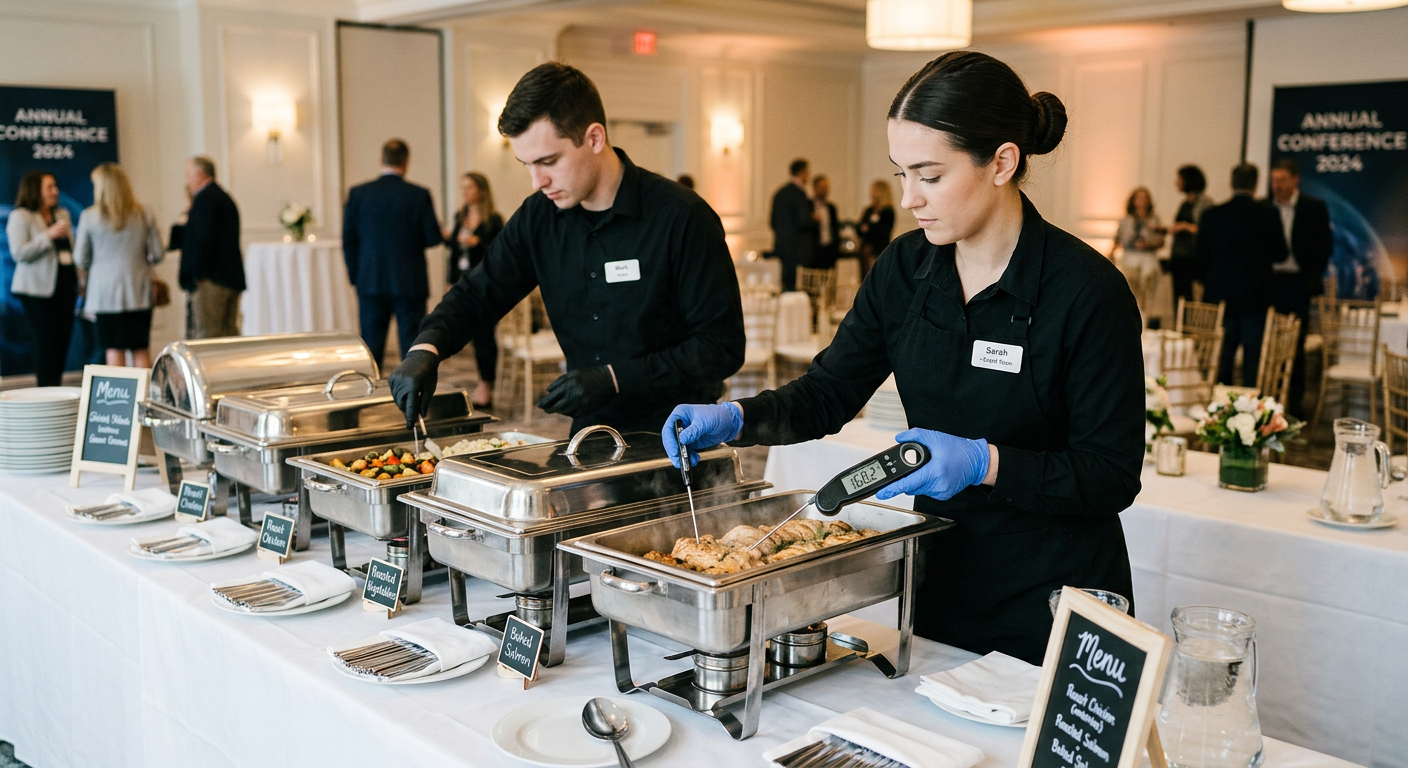
A professional caterer should be able to explain how they keep hot food above 140°F and cold food at or below 40°F, since food held in this "danger zone" for more than two hours (one hour above 90°F ambient temperature) is a known food safety risk per federal guidance. Ask about temperature control, allergy handling, transport time, and staff food-handling certification before booking.
Why temperature control questions matter
Federal food safety guidance identifies 40°F to 140°F as the "danger zone" where bacteria multiply rapidly, and recommends that perishable food not sit in that range for more than two hours (or one hour if the ambient temperature is 90°F or higher, such as an outdoor summer event). A caterer’s plan for hot-holding, cold-holding, and transport time directly affects guest safety, especially for outdoor or long-duration events.
- Ask how food is kept hot (chafing dishes, warming equipment) and cold (ice baths, refrigerated transport) during service.
- For outdoor events, ask specifically how the caterer adjusts for high ambient temperatures.
- Confirm the transport time from the kitchen to your venue and how temperature is maintained during transit.
Allergy and dietary accommodation
Share a complete list of allergies and dietary restrictions in writing well before the event, and ask the caterer to confirm in writing how each will be handled—including cross-contact prevention for severe allergies like nuts or shellfish.
- Ask how the caterer labels dishes containing common allergens.
- For severe allergies, ask about dedicated prep surfaces or utensils to prevent cross-contact.
- Confirm substitutions are communicated to guests, not assumed.
Staff certification and health permits
Many jurisdictions require food handlers to complete a food safety certification and caterers to hold a health permit for event service. Ask your caterer directly whether their staff is certified and whether they hold the permits required in your event’s location—requirements vary by state and county.
Questions before you sign
Beyond food safety, confirm headcount deadlines, dietary meal counts, service style (buffet, plated, family-style), staffing, rental equipment (chafers, linens, flatware), and cleanup responsibility in your contract. Picnyk can help you discover and compare caterers; the caterer you hire remains responsible for food safety, permits, and execution.
Frequently asked questions
What is the food "danger zone" and why does it matter for catering?
The danger zone is the temperature range between 40°F and 140°F where bacteria grow rapidly. Federal food safety guidance recommends not leaving perishable food in this range for more than two hours, or one hour if the ambient temperature is 90°F or higher.
Does a caterer need a health permit?
Many jurisdictions require caterers to hold a health permit and certified food handlers on staff. Requirements vary by state and county, so confirm directly with your caterer and local health department if you have concerns.
How should I communicate allergies to a caterer?
Provide a complete written list of allergies and dietary restrictions as early as possible, and ask the caterer to confirm in writing how each will be handled, including cross-contact prevention for severe allergies.