Direct answer
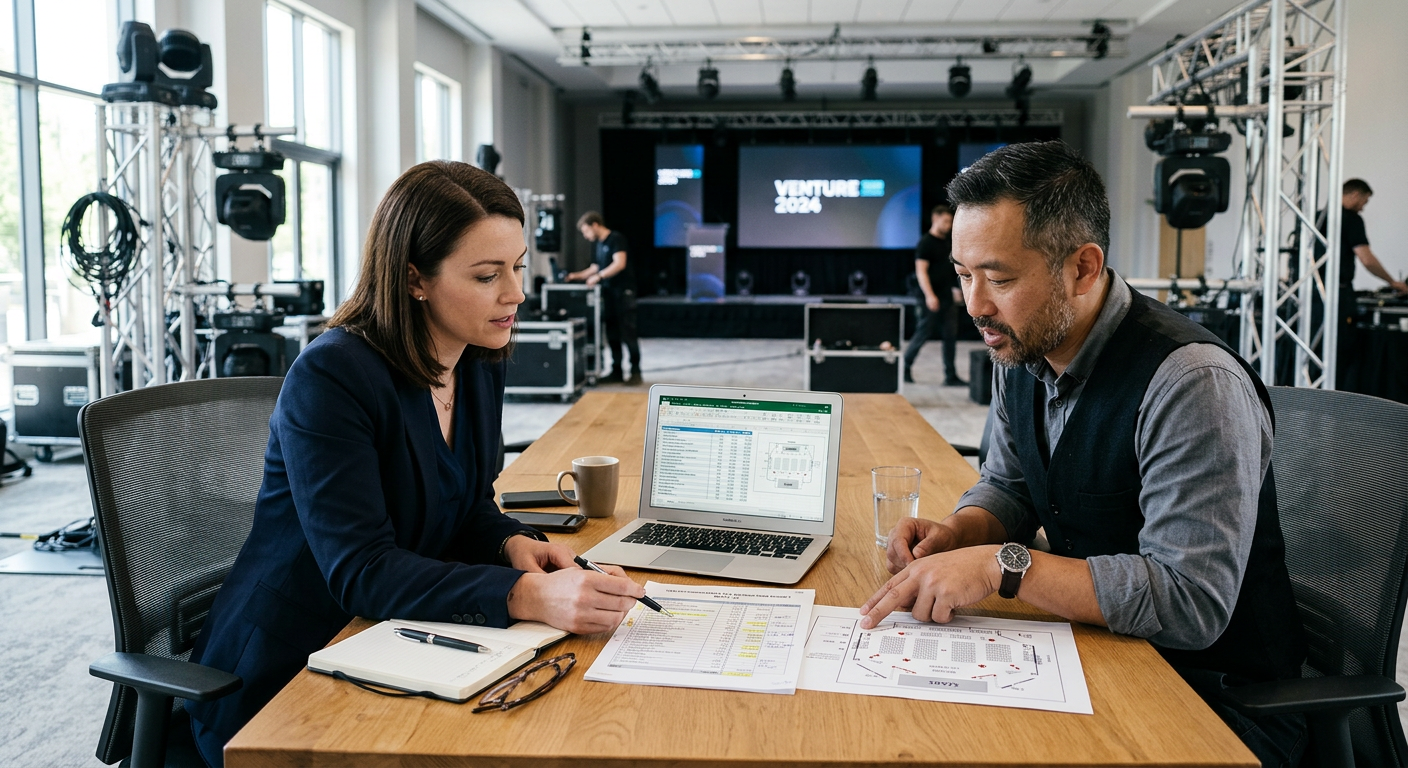
Event production cost is driven by five factors: equipment (owned versus rented), labor (crew size, certification, and overtime), venue complexity (power, rigging, load-in access), redundancy (backup systems), and timeline (rehearsal, show-file freeze, and strike). There is no single "average" event production price—ask every vendor to itemize these factors so you can compare quotes on the same basis rather than a single bundled number.
Why "how much does event production cost" has no single answer
Searches for a flat event production price point are common, but the honest answer depends on scope: a single-microphone panel discussion and a multi-camera hybrid keynote with a broadcast-quality livestream are both "event production," yet they require entirely different equipment, crew size, and redundancy. Treat any flat quoted number without a scope attached as incomplete.
The more useful question is which cost factors apply to your event, and how a vendor prices each one. That turns a vague budget conversation into a comparable, line-item estimate.
The cost factors behind every production quote
Ask every vendor to break down its quote using the same categories. This makes it possible to see where one proposal is cheaper because it is doing less—not because it is more efficient.
- Equipment: owned gear is typically priced differently than third-party rentals, and specialty items (LED walls, broadcast cameras, line-array sound) carry a premium.
- Labor: crew size, certification (such as rigging certification), standard hours, and overtime triggers.
- Venue complexity: load-in access, available power circuits, rigging points, and whether house AV systems can be used or must be replaced.
- Redundancy: backup microphones, playback systems, recording devices, and contingency staffing for critical moments.
- Timeline: rehearsal time, show-file freeze deadlines, and strike windows—compressed timelines generally increase labor cost.
- Logistics: freight, travel, lodging for out-of-market crew, permits, and insurance.
Where hidden costs usually appear
The most common gap between a quoted estimate and the final invoice is overtime from an extended load-in, strike, or show runtime. The second most common gap is a missing line item for power distribution, additional internet capacity, or venue house fees that were assumed but never confirmed in writing.
- Confirm load-in and strike windows in the contract, including the overtime rate and trigger.
- Ask whether venue house fees, additional power drops, or union labor requirements are included or excluded.
- For outdoor or tented events, confirm what weather contingency plan is priced in versus billed separately if needed.
- Clarify who pays for a reshoot, re-record, or technical fix if equipment fails during the event.
How to build a defensible production budget
Build your budget around the event objective first, then size equipment and crew to match. A simple panel does not need the same redundancy as a product launch with media coverage. Request two scope options from your top vendors—one base scope and one with additional redundancy or capacity—so you can see exactly what changes with the budget.
Keep a contingency line (commonly 10–15% of the production budget) for weather, overtime, or last-minute technical changes rather than treating the initial quote as a hard ceiling. Picnyk can help you discover and compare production and AV vendors; your contracted vendor remains responsible for pricing, staffing, and delivering its own scope.
Frequently asked questions
What is the biggest driver of event production cost?
Labor and redundancy typically drive cost more than equipment alone. A production with backup systems, a larger crew, and a compressed load-in/strike window will cost more than a simple setup with a single technician and no backup equipment, even with similar gear.
Why did one vendor quote much less than another for the same event?
A lower quote is often doing less: fewer crew hours, no redundancy, bundled rather than itemized labor, or an assumption that venue house AV can be reused. Ask for an itemized breakdown before assuming the lower number is the better deal.
How much contingency should I budget for event production?
Many planners reserve roughly 10–15% of the production budget for contingencies such as overtime, weather for outdoor events, or last-minute technical changes. Confirm your vendor’s own overtime and change-order policy in writing.
Can Picnyk quote my event production cost directly?
Picnyk is a marketplace for comparing event vendors, including production and AV partners, and can help you request quotes. Final pricing is set by the production vendor you choose based on your specific scope.