Direct answer
A reliable event DJ should confirm music format and request process, equipment they own versus rent, backup gear for sound and lighting failures, setup and breakdown windows, liability insurance, and a written contract covering cancellation and overtime. Compare DJs on these specifics, not just a demo mix or review count.
Why "DJ" covers very different service levels
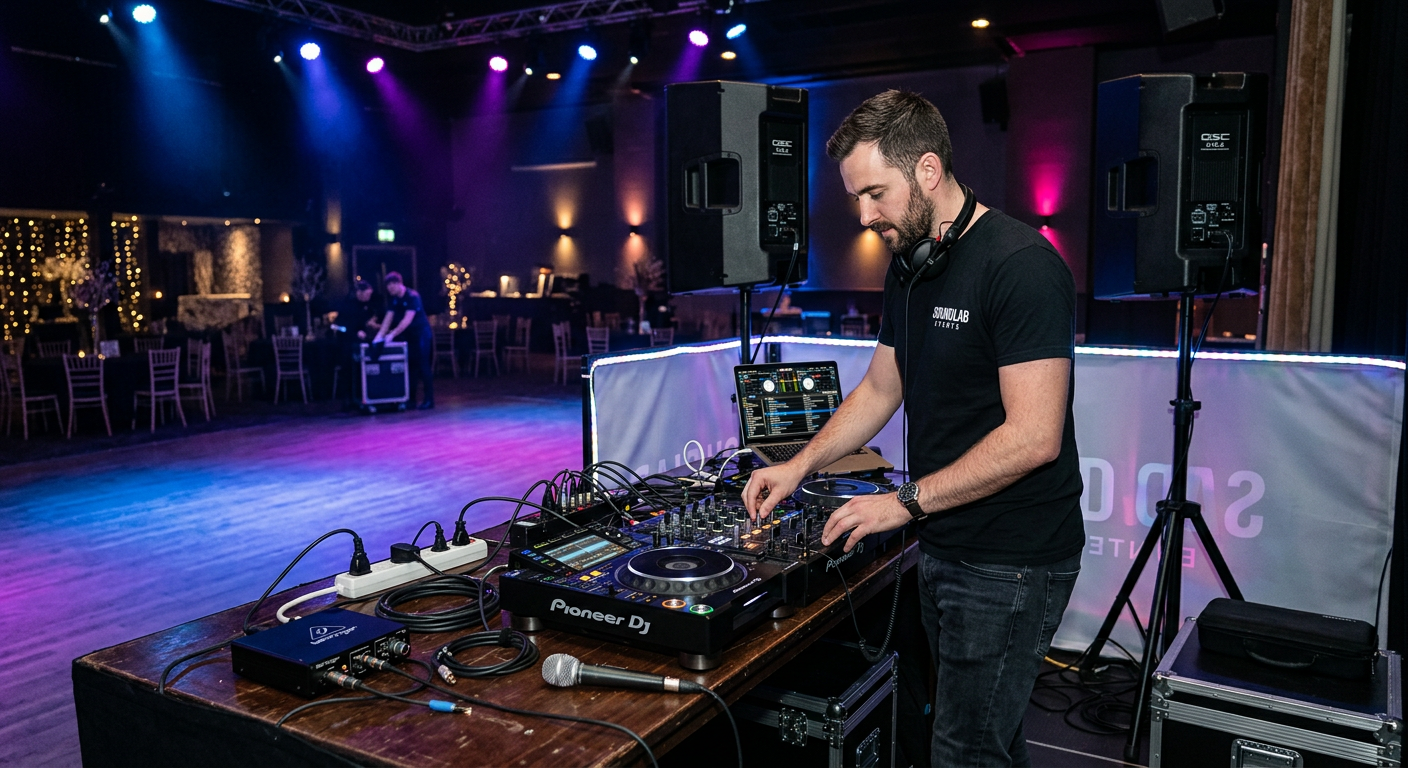
Some DJs bring a single speaker and a laptop; others run a full sound system, MC services, lighting, and a backup rig. Before comparing prices, confirm exactly what is included: sound system size and coverage for your guest count, microphones for speeches or toasts, uplighting or dance floor lighting, and whether the DJ also acts as an MC for announcements.
- Confirm the sound system is sized for your venue and guest count, not just "a speaker."
- Ask whether MC duties (introductions, announcements, timeline cues) are included or billed separately.
- Clarify how music requests, must-play lists, and do-not-play lists are handled.
- Confirm whether the DJ brings their own lighting or if that is a separate rental.
Equipment and backup plans
Equipment failure is one of the most common reasons an event DJ underdelivers. Ask what backup equipment travels with them—a second laptop, backup speaker, and spare cables—and what the plan is if a system fails mid-event. A DJ with no stated backup plan is a real operational risk for a wedding or milestone event.
- Ask if a backup laptop, playlist, and audio interface travel with the DJ to every event.
- Confirm power requirements and who is responsible if the venue cannot provide enough circuits.
- Ask about setup and breakdown time and whether that time is included in the booked hours.
Contract terms that protect your event
Get the date, time, location, included equipment, overtime rate, cancellation and rescheduling policy, and deposit terms in writing. Ask whether the DJ carries liability insurance—many venues require a certificate of insurance before allowing outside vendors to perform.
- Confirm the overtime rate and how extensions are requested on event day.
- Ask for a certificate of insurance if your venue requires one.
- Clarify the cancellation and weather/illness backup policy, including whether a substitute DJ may be sent.
Questions to ask before you book
A short reference call or past-client review can surface issues a demo reel will not: how the DJ reads a room, how they handle schedule changes, and whether they showed up on time and prepared. Picnyk can help you discover and compare DJs; the DJ you book remains responsible for their own equipment, performance, and contract terms.
Frequently asked questions
What should be included in a DJ contract?
Date, time, location, equipment included, overtime rate, deposit and payment schedule, cancellation and rescheduling terms, and whether a substitute DJ may be sent if the booked DJ becomes unavailable.
Does an event DJ need liability insurance?
Many venues require vendors, including DJs, to carry liability insurance and provide a certificate of insurance before they can set up equipment on-site. Confirm your venue’s requirement before booking.
What happens if a DJ’s equipment fails during an event?
Ask in advance what backup equipment the DJ brings, such as a second laptop or backup speaker, and what their plan is for a mid-event failure. A DJ without a stated backup plan is a higher-risk booking for an important event.