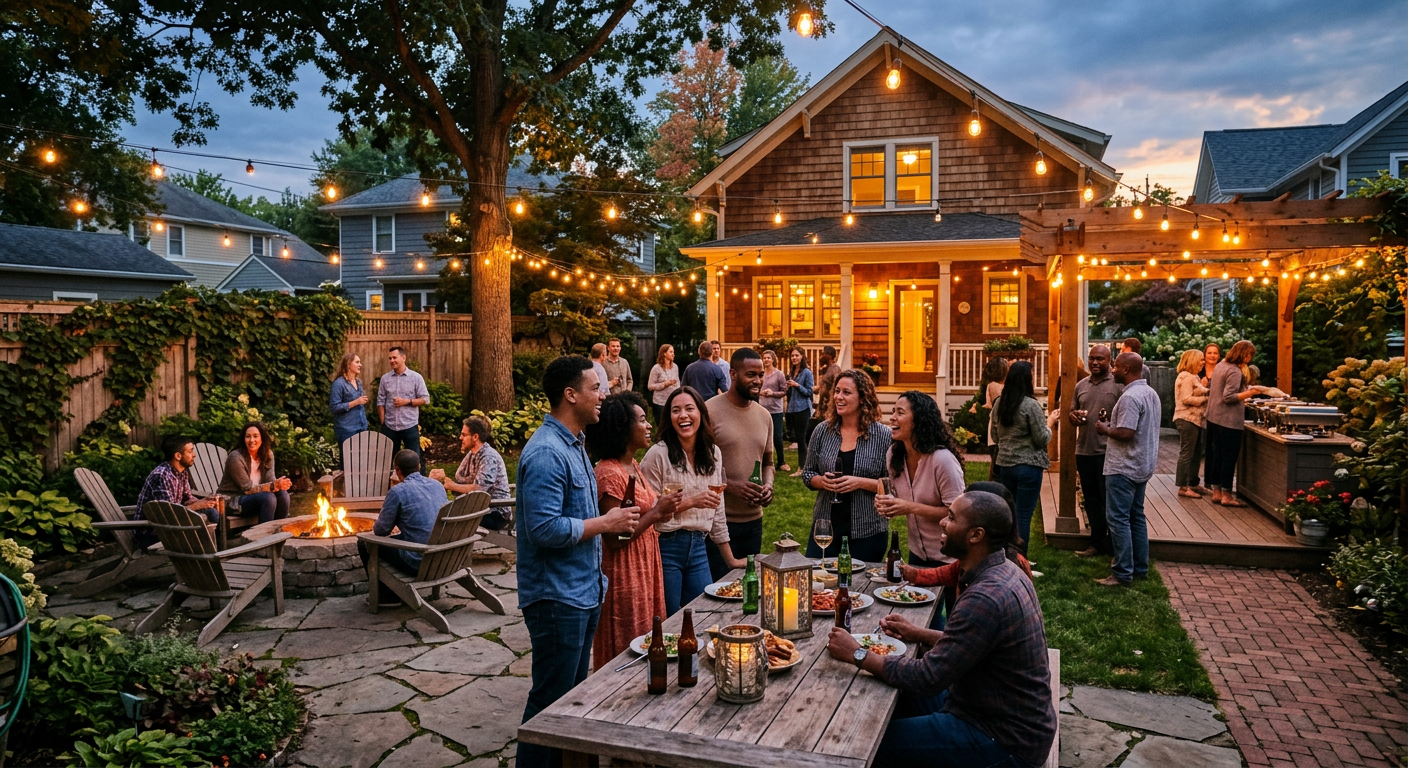
Direct answer
Hosting at home avoids a venue rental fee but shifts responsibility for noise compliance, parking, capacity, and neighbor relations onto you. A rented venue typically has established noise, capacity, and parking arrangements built in. For amplified music, large guest counts, or street parking impact, check your city’s noise ordinance and permit requirements before committing to a home event.
Noise ordinances and permits vary by city
Many cities require a permit for amplified sound at a private residential event, particularly if music will play late into the evening or speakers will be used outdoors. Requirements differ significantly by municipality: some cities require advance notice to neighbors, a permit application through the city or police department, and compliance with a cutoff time (commonly in the 10 p.m. to 11 p.m. range in jurisdictions that publish one). Always confirm directly with your city clerk’s office or local police non-emergency line, since this guide cannot state a universal rule that applies everywhere.
What a rented venue typically handles for you
Commercial venues are usually zoned for events and have already secured occupancy limits, parking arrangements, and (in many cases) a track record with local noise enforcement. This can meaningfully reduce the operational and legal risk compared to hosting the same event at a private residence.
- Venues typically have a confirmed occupancy limit, reducing fire-code and safety risk.
- Parking is often included or arranged, reducing street parking conflicts with neighbors.
- Many venues have existing relationships with local authorities regarding noise and event timing.
Questions to ask before hosting a large event at home
If you decide to host at home, treat the logistics with the same seriousness as a venue would.
- Does my city require a permit for amplified sound or a large private gathering?
- What is the noise cutoff time in my jurisdiction, and does it differ for weekends?
- Do I need to notify neighbors in advance, and is written consent required anywhere I plan to use outdoor speakers?
- Where will guests park, and could street parking create a conflict with neighbors or violate local rules?
- Does my homeowner’s or renter’s insurance cover an event with this guest count and activities (such as alcohol service)?
Making the decision
For a small, early-ending gathering with a modest guest list, hosting at home is often simpler and less expensive. For a large, amplified, or late-running event, a rented venue frequently reduces risk and administrative burden enough to justify the rental cost. Picnyk can help you compare venues and vendors for either path.
Frequently asked questions
Do I need a permit to play music at a backyard party?
It depends on your city. Many municipalities require a permit for amplified outdoor sound, especially late into the evening. Confirm directly with your city clerk’s office or local police department, since requirements vary significantly by location.
What time does residential noise typically need to stop?
This varies by city. Some jurisdictions publish a cutoff (commonly in the 10 p.m. to 11 p.m. range), but there is no single national rule—check your specific city’s noise ordinance.
Is it cheaper to host at home instead of booking a venue?
Hosting at home avoids a rental fee, but costs can shift elsewhere—rentals (tables, tents, restrooms), potential permit fees, and the time cost of managing logistics a venue would otherwise handle. Compare the full cost, not just the rental fee avoided.