Direct answer
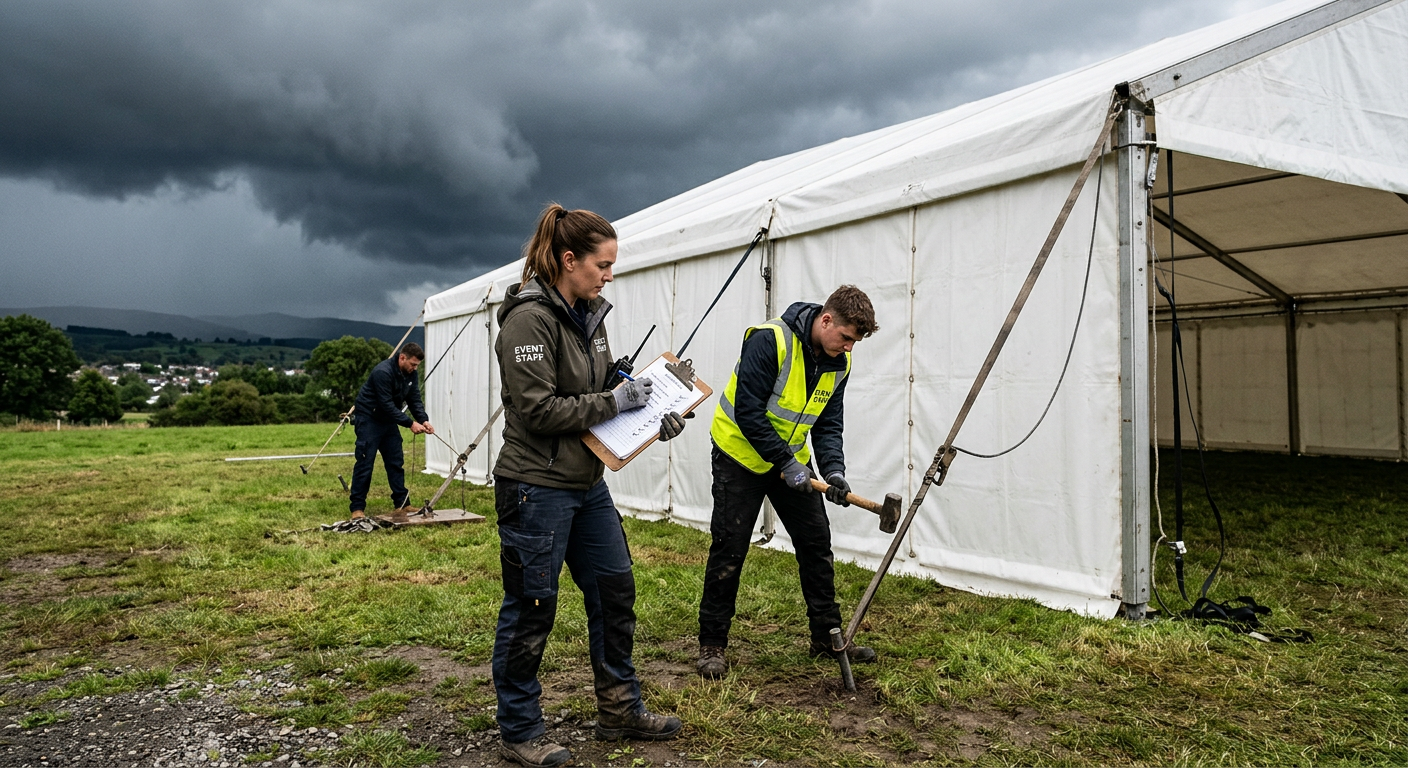
Every outdoor event needs a written weather contingency plan: a designated person monitoring the forecast, a clear decision point for activating an indoor backup or delaying the event, and lightning safety protocol. Ready.gov’s guidance is direct: "When thunder roars, go indoors"—there is no safe outdoor location once lightning is in the area, and activities should pause immediately rather than waiting to see if the storm passes.
Build the plan before event week
A weather contingency plan should name a specific person responsible for monitoring the forecast in the days leading up to and during the event, define what conditions trigger a change (a rain delay, moving to an indoor backup, or full cancellation), and confirm in advance what indoor space is available if needed. Deciding these details during a storm, under pressure, leads to worse outcomes than deciding them in advance.
Lightning safety basics
Ready.gov states plainly: "When thunder roars, go indoors!"—move from outdoors into a building or a hard-topped vehicle with the windows up. There is no safe outdoor location during a thunderstorm, including under a tent, pavilion, or other partial shelter. The same guidance recommends staying inside for at least 30 minutes after the last thunder before resuming outdoor activity.
- If thunder is audible, move everyone indoors or into a hard-topped vehicle immediately—do not wait to see if the storm passes.
- Tents and open-sided structures are not safe shelter from lightning.
- Wait at least 30 minutes after the last thunder before returning outside, per Ready.gov guidance.
Vendor contracts and weather
Ask every outdoor vendor (rentals, catering, entertainment) what their specific weather policy is: do they have a rain plan, is there a fee for a weather-related delay, and what happens to deposits if the event is canceled due to severe weather. These terms should be in writing before the event, not negotiated during a storm.
- Ask rental companies about their policy for high wind, since tents have wind rating limits.
- Confirm whether vendors charge for delays, reschedules, or cancellations due to weather.
- Clarify who makes the final call to cancel or delay—the host, the venue, or a lead vendor.
Communicating with guests
Decide in advance how you will notify guests of a weather-related change—text, email, or a day-of coordinator stationed at the entrance—so the message reaches people quickly if plans change close to the event time. Picnyk can help you discover venues with indoor backup space and vendors with clear weather policies; activating the plan on event day remains the host’s responsibility.
Frequently asked questions
What should I do if I hear thunder during an outdoor event?
Move everyone indoors or into a hard-topped vehicle immediately. Per Ready.gov guidance, there is no safe outdoor location during a thunderstorm, including under a tent, and activities should pause right away rather than waiting to see if the storm passes.
How long should we wait after a storm before going back outside?
Ready.gov guidance recommends waiting at least 30 minutes after the last thunder is heard before resuming outdoor activity.
Should I ask vendors about their weather policy before booking?
Yes. Ask about rain plans, fees for weather-related delays, and cancellation/deposit terms for severe weather before signing a contract, not after a storm is already approaching.