Direct answer
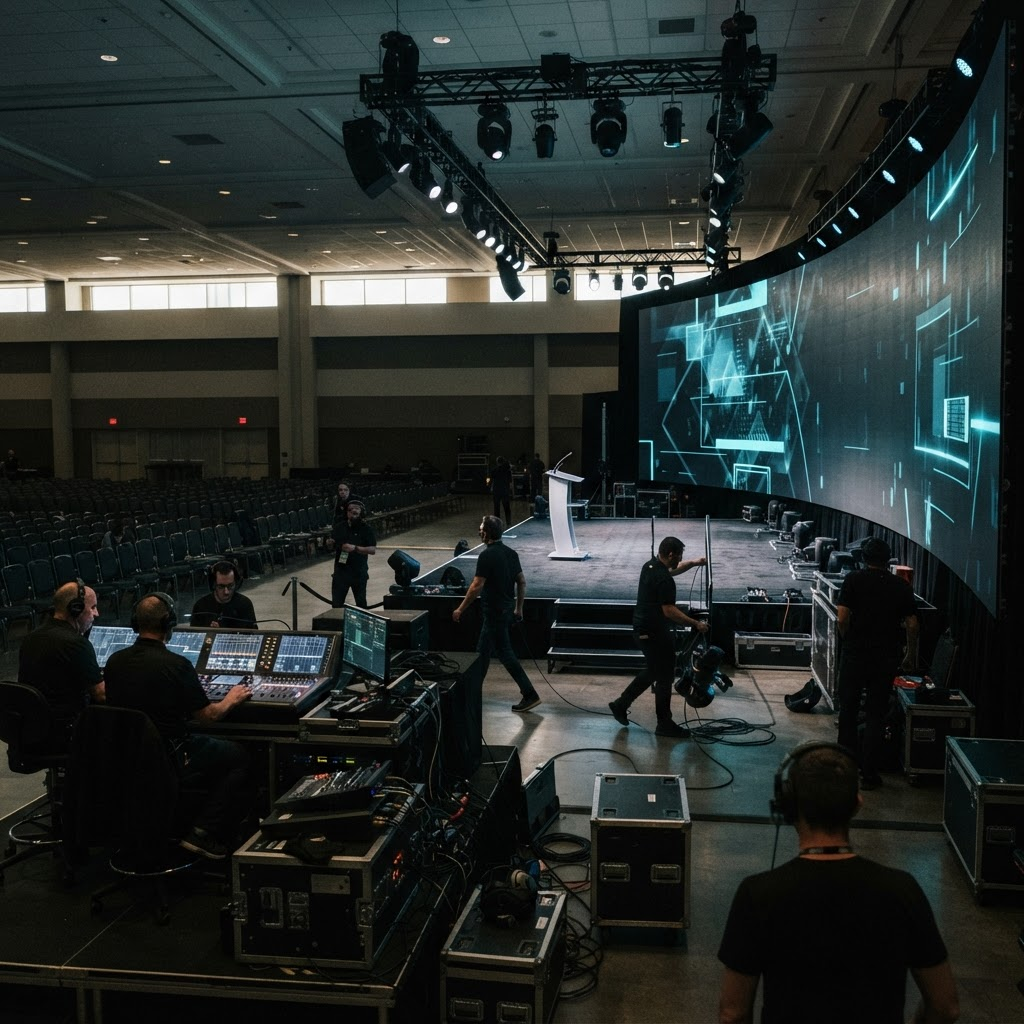
San Jose conference production should be designed around program reliability: room standards, demo dependencies, dedicated internet, protected power, content control, freight, labor, accessibility, rehearsals, and a documented recovery plan. Confirm venue services and city requirements before contracting outside systems.
Confirmed
- San Jose has its own special-event authority process.
- Technology demonstrations can create power and connectivity dependencies beyond normal presentation AV.
- Venue-controlled work must be identified before comparing outside proposals.
Quote-dependent
- Venue internet, electrical, rigging, and exclusive services
- Demo bandwidth, network security, and redundancy
- Freight, labor, security, permits, and after-hours access
How do you production-plan a technology conference?
Inventory every demo device, input, network dependency, power draw, operator, content owner, and fallback before choosing systems.
What should be standardized across rooms?
Create repeatable breakout packages, naming, content intake, confidence monitoring, recording, captioning, and escalation coverage.
How should freight and rehearsals work?
Tie dock windows, storage, room access, stage build, speaker-ready, technical checks, and presenter rehearsals to one master schedule.
Recommended production timeline
These are Picnyk planning recommendations, not organizer deadlines. Current official portals and venue documents control.
Sources and editorial method
Official sources establish dates, venues, jurisdictions, and public processes. Picnyk recommendations are labeled separately. Sources are starting points, not universal approvals; current organizer, venue, and authority documents control.
Frequently asked production questions
How early should a company book event production in San Jose?
Start 12–16 weeks ahead for a multi-room corporate program and earlier when the event needs complex scenic work, rigging, broadcast, permits, or compressed venue access. Availability and venue deadlines control the actual lead time.
What should an event-production proposal include?
Require the same room, equipment, crew positions, labor hours, rehearsal, freight, venue services, taxes, substitutions, overtime, cancellation terms, and exclusions from every bidder before comparing totals.
Who controls in-house or exclusive venue services?
The venue identifies exclusive or required providers. The production team should document who owns rigging, power, internet, freight, security, and house-system interfaces before the client signs the final scope.
Continue the production plan
National event production
Turn the brief into a production-ready scope.
Picnyk scopes and delivers audio, video, lighting, staging, show operations, labor coordination, and technical production through one accountable production manager.