Direct answer
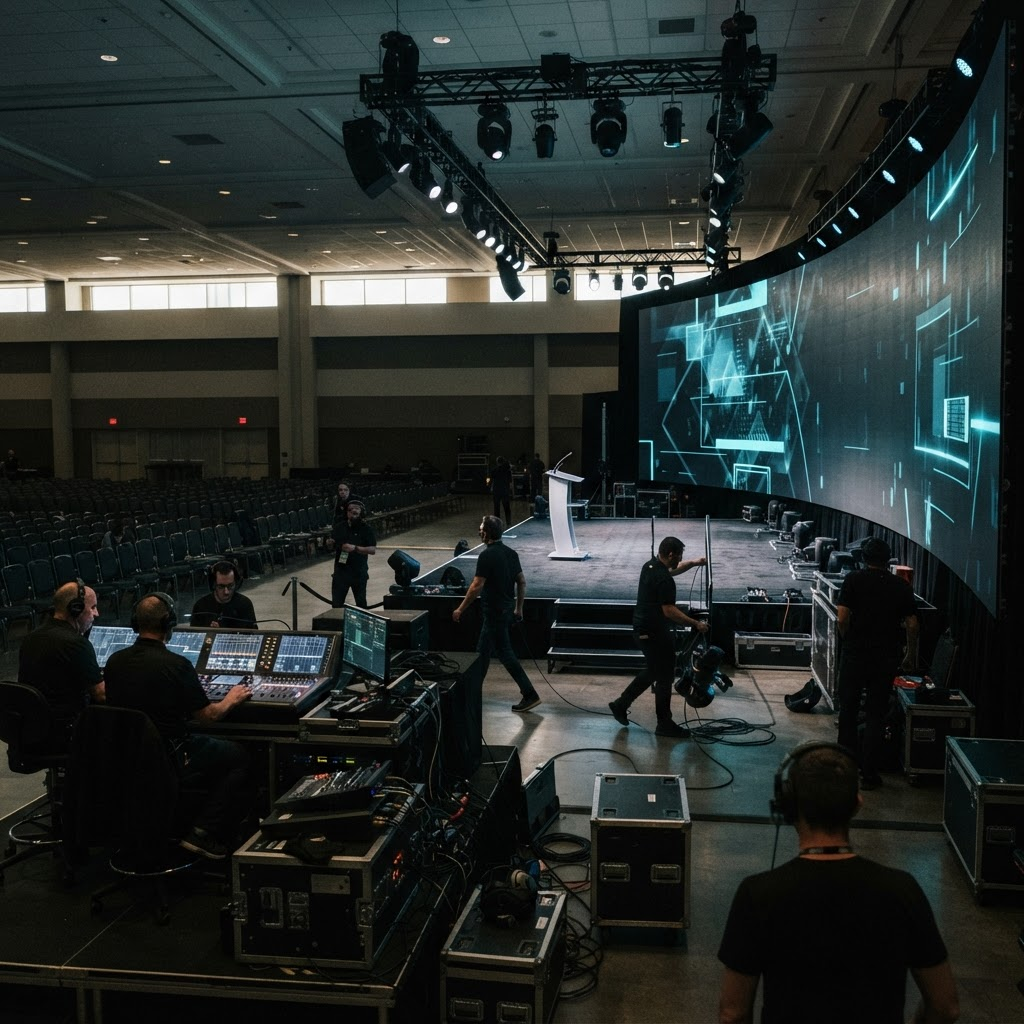
A reliable Bay Area hybrid event needs dedicated and tested connectivity, redundant signal and recording paths, a remote-speaker workflow, accessible captions, technical rehearsals, rights clearance, and a recovery plan. Venue Wi-Fi alone is not a production design.
Confirmed
- Hybrid programs add remote audience and platform dependencies.
- Captioning and accessible media must be included in the workflow rather than added at show time.
- Venue connectivity must be tested against the actual platform and signal plan.
Quote-dependent
- Dedicated bandwidth and network configuration
- Platform, captioning, recording, rights, and distribution
- Camera count, remote contribution, crew, rehearsal, and redundancy
What systems does a hybrid event need?
Map cameras, microphones, playback, graphics, switching, encoding, return video, remote contribution, captions, recording, monitoring, and backup paths.
How should internet be specified?
Define dedicated bandwidth, wired handoff, firewall needs, public IP requirements, test windows, support contacts, and a separate backup path.
How should remote speakers rehearse?
Test device, connection, framing, audio, lighting, slides, return feeds, captions, contact path, and fallback recording before show day.
Recommended production timeline
These are Picnyk planning recommendations, not organizer deadlines. Current official portals and venue documents control.
Sources and editorial method
Official sources establish dates, venues, jurisdictions, and public processes. Picnyk recommendations are labeled separately. Sources are starting points, not universal approvals; current organizer, venue, and authority documents control.
Frequently asked production questions
How early should a company book event production in San Francisco Bay Area?
Start 12–16 weeks ahead for a multi-room corporate program and earlier when the event needs complex scenic work, rigging, broadcast, permits, or compressed venue access. Availability and venue deadlines control the actual lead time.
What should an event-production proposal include?
Require the same room, equipment, crew positions, labor hours, rehearsal, freight, venue services, taxes, substitutions, overtime, cancellation terms, and exclusions from every bidder before comparing totals.
Who controls in-house or exclusive venue services?
The venue identifies exclusive or required providers. The production team should document who owns rigging, power, internet, freight, security, and house-system interfaces before the client signs the final scope.
Continue the production plan
National event production
Turn the brief into a production-ready scope.
Picnyk scopes and delivers audio, video, lighting, staging, show operations, labor coordination, and technical production through one accountable production manager.